Tag: Doctrines of Grace

  • No Hope Without Grace: What Total Depravity Really Means

    No Hope Without Grace: What Total Depravity Really Means

    Dear Theo,

    “Christ Jesus came into the world to save sinners, of whom I am the foremost” (1 Timothy 1:15 ESV).

    Paul wrote those words near the end of his life. This was not a young convert crushed by guilt. This was the apostle to the Gentiles, the church planter, the man who wrote much of the New Testament. And his settled verdict on himself was this: I am the worst of sinners.

    Notice the tense. He does not say “of whom I was the foremost,” as though he were describing his old life of persecuting the church. He says “I am.” Present tense. The holiest man most of us will ever read looked at his own heart and called himself the worst sinner he knew.

    That is where the doctrine of total depravity begins. Not with a theory about other people. With a confession.

    What the Doctrine Claims

    Dark grey storm clouds filling the sky
    Photo by Lucie Morel on Unsplash

    Total depravity is the first of the doctrines of grace, and it is the one our age resists most. The phrase needs defining, because it is widely misunderstood.

    Total depravity does not mean that every person behaves as wickedly as possible. God restrains evil in the world, and He has written a measure of His law on every human conscience (Romans 2:14-15 ESV). Outward restraint is real.

    What the doctrine means is this: every part of human nature has been corrupted by sin. The mind, the will, the affections, the conscience. There is no faculty left untouched. The 1689 London Baptist Confession states it plainly: by the fall, man was “wholly defiled in all the faculties and parts of soul and body” (1689 London Baptist Confession 6.2).

    John Calvin taught the same. In his Institutes of the Christian Religion, Calvin argues that since Adam’s fall, the whole man is overwhelmed by sin as by a flood. The intellect is blinded to spiritual truth. The will, which we flatter ourselves is free, is in bondage. It chooses freely according to its desires, but its desires are corrupt, so it freely chooses sin. This is why the Confession says that fallen man has “wholly lost all ability of will to any spiritual good accompanying salvation” (1689 London Baptist Confession 9.3). Not some ability. All ability.

    Jonathan Edwards pressed the point further still. In his defense of the doctrine of original sin, Edwards argued that the corruption is both universal and total. Every human heart, left to itself, leans away from God and toward sin. We are not neutral beings who occasionally choose wrongly. The leaning itself is wrong. The fountain is poisoned, so the stream that flows from it is poisoned.

    Dead, Not Sick

    Silhouettes of evergreen trees wreathed in thick fog
    Photo by adrian aows via Unsplash

    Scripture does not describe the sinner as sick and in need of medicine. It describes him as dead and in need of resurrection. “And you were dead in the trespasses and sins in which you once walked” (Ephesians 2:1 ESV). A sick man can reach for the remedy. A dead man cannot reach for anything.

    This is why Paul’s confession carries such weight. If even Paul saw himself as the foremost of sinners, what does that tell us? It tells us that drawing near to God does not produce self-satisfaction. It produces the opposite. The closer a person comes to the light, the more clearly he sees his own darkness. Isaiah saw the Lord high and lifted up, and his immediate cry was, “Woe is me! For I am lost” (Isaiah 6:5 ESV). The tax collector in our Lord’s parable would not even lift his eyes to heaven, but beat his breast, saying, “God, be merciful to me, a sinner” (Luke 18:13 ESV). Saints do not outgrow this confession. They grow into it.

    So when we say that total depravity means you are the worst, we mean this: before God, none of us can plead that we are better than others. The ground is level at the foot of the cross, and it is level because we are all face down. “None is righteous, no, not one; no one understands; no one seeks for God” (Romans 3:10-11 ESV). That is God’s verdict on the whole race. And the honest heart answers with Paul: I am the foremost.

    No Hope Without Grace

    Sunlight breaking over mountain ridges at dawn
    Photo by Constant Loubier on Unsplash

    Here is why the doctrine matters. It is not gloom for gloom’s sake. It is the necessary foundation for grace.

    If man were only partly corrupt, salvation could be partly his own work. God might do His part, and man might do his. But if man is dead, salvation must be entirely God’s work. Dead men do not cooperate in their own resurrection. Lazarus did not meet Jesus halfway out of the tomb.

    Jesus said, “No one can come to me unless the Father who sent me draws him” (John 6:44 ESV). The word “can” speaks of ability. The sinner cannot come because he will not come. Nothing outside him prevents him. His own heart prevents him, for men love darkness rather than light (John 3:19 ESV). Edwards saw this with terrible clarity: in his most famous sermon, he pictured the sinner hanging over the pit by nothing but the mere pleasure of God, with no strength of his own to hold on.

    This leaves us with exactly one hope, and it is a glorious one: sovereign grace. If the sinner cannot raise himself, God must raise him. And He does. “But God, being rich in mercy, because of the great love with which he loved us, even when we were dead in our trespasses, made us alive together with Christ, by grace you have been saved” (Ephesians 2:4-5 ESV).

    Mark the order. We were dead. God made us alive. Grace does not assist the living. It resurrects the dead.

    The Confession calls this effectual calling: in God’s appointed time, He calls sinners by His Word and Spirit out of the state of sin and death, renewing their wills so that they come to Christ freely, because He has made them willing (1689 London Baptist Confession 10.1). And the whole of it is mercy: “he saved us, not because of works done by us in righteousness, but according to his own mercy” (Titus 3:5 ESV). “For by grace you have been saved through faith. And this is not your own doing; it is the gift of God, not a result of works, so that no one may boast” (Ephesians 2:8-9 ESV).

    The Sweetness of Grace

    Here is the pastoral payoff. The worse you know your sin to be, the sweeter grace becomes.

    A man who believes he is only slightly ill will be only slightly grateful for the cure. A man who knows he was dead and has been raised will never get over it. This is why the greatest saints have been the most honest about their sin. They were not performing humility. They were seeing clearly.

    Edwards understood that this doctrine is meant to drive sinners not to despair, but to Christ. Despair of yourself, yes. Despair altogether, no. The entire purpose of seeing that there is no hope in you is to see that all hope is in Him.

    So let Paul’s confession stand, in the present tense: I am the foremost of sinners. And let the gospel answer stand beside it: Christ Jesus came into the world to save sinners. The worse the sinner, the greater the Savior. There is no hope of salvation without grace. And grace, praise God, is exactly what we have.

    Sincerely, your friend
  • Of God’s Decree, Without the Panic

    Of God’s Decree, Without the Panic

    Of all the words in the Christian vocabulary, “decree” might be the one most likely to raise your blood pressure. It sounds cold. It sounds like fate. It sounds like God decided everything in advance and we are just actors reading lines.

    If that is what you hear when you hear “the decree of God,” then the 1689 London Baptist Confession has good news for you: that is not what it means either. Chapter 3, “Of God’s Decree,” is one of the most pastoral chapters in the whole confession. It was written to steady Christians, not to frighten them.

    What the Confession actually says

    Here is the opening paragraph, and it deserves a slow read:

    “God hath decreed in himself, from all eternity, by the most wise and holy counsel of his own will, freely and unchangeably, all things, whatsoever comes to pass; yet so as thereby is God neither the author of sin nor hath fellowship with any therein; nor is violence offered to the will of the creature, nor yet is the liberty or contingency of second causes taken away, but in all things established; in which appears his wisdom in disposing all things, and power and faithfulness in accomplishing his decree.” (1689 LBC 3.1)

    There is a lot packed in there, but the shape of it is simple. From all eternity, before anything existed, God purposed whatsoever comes to pass. He did this freely (nobody forced him), wisely (it is the product of infinite wisdom, not whim), and unchangeably (he does not revise the plan).

    Scripture says the same thing plainly: God “works all things according to the counsel of his will” (Ephesians 1:11, ESV), and “I am God, and there is no other; I am God, and there is none like me, declaring the end from the beginning and from ancient times things not yet done, saying, ‘My counsel shall stand, and I will accomplish all my purpose’” (Isaiah 46:9-10, ESV).

    What the decree does not mean

    But notice how carefully the confession draws the boundaries. Three denials, each aimed at a specific fear.

    First, God is “neither the author of sin nor hath fellowship with any therein.” The decree does not make God the one responsible for evil. Scripture holds two truths together that our minds want to pull apart: God ordains whatsoever comes to pass, and sinners sin willingly and are accountable. Peter preached both in the same sermon, saying Jesus was “delivered up according to the definite plan and foreknowledge of God” and in the same breath, “you crucified and killed by the hands of lawless men” (Acts 2:23, ESV). God’s decree and human responsibility are friends, not enemies.

    Second, “nor is violence offered to the will of the creature.” The decree does not turn you into a puppet. You make real choices, you have a real will, and your choices have real consequences. God’s eternal purpose works through your willing actions, not around them.

    Third, “nor yet is the liberty or contingency of second causes taken away.” This is the confession’s way of saying that the world still runs the way the world runs. Rain still falls because of weather patterns. You still got the job because you applied and interviewed well. God’s decree is the deep foundation under all of it, not a replacement for any of it.

    If your picture of the decree leaves no room for genuine human choice, you have gone further than the confession goes. Pull back to paragraph 1.

    Election, plainly

    The chapter goes on to speak of predestination and election, and here is where the panic usually spikes. So let us be plain.

    The confession teaches that from eternity, God chose some to everlasting life, “out of his mere free grace and love, without any other thing in the creature as a condition or cause moving him thereunto” (1689 LBC 3.5). Election is not God looking down the corridor of time, seeing who would choose him, and then ratifying their decision. It is God choosing, freely, out of love.

    And the rest he was “pleased, according to the unsearchable counsel of his own will, whereby he extendeth or withholdeth favour as he pleaseth,” to pass by (1689 LBC 3.7). The confession does not pretend this is easy. It calls God’s counsel “unsearchable.” But it insists that God is never unjust in what he withholds, because no one deserves his favour in the first place.

    Now here is the question that actually keeps people up at night: “Am I elect?” The confession’s answer is wonderfully practical. Do not try to peer into God’s secret decree. Look instead at its effects in your life. Are you trusting Christ? Are you turning from sin? Do you love the saints? Then you have your answer, not by speculation but by evidence. As Peter puts it, “be all the more diligent to confirm your calling and election” (2 Peter 1:10, ESV). Election is confirmed the way a tree is confirmed: by its fruit.

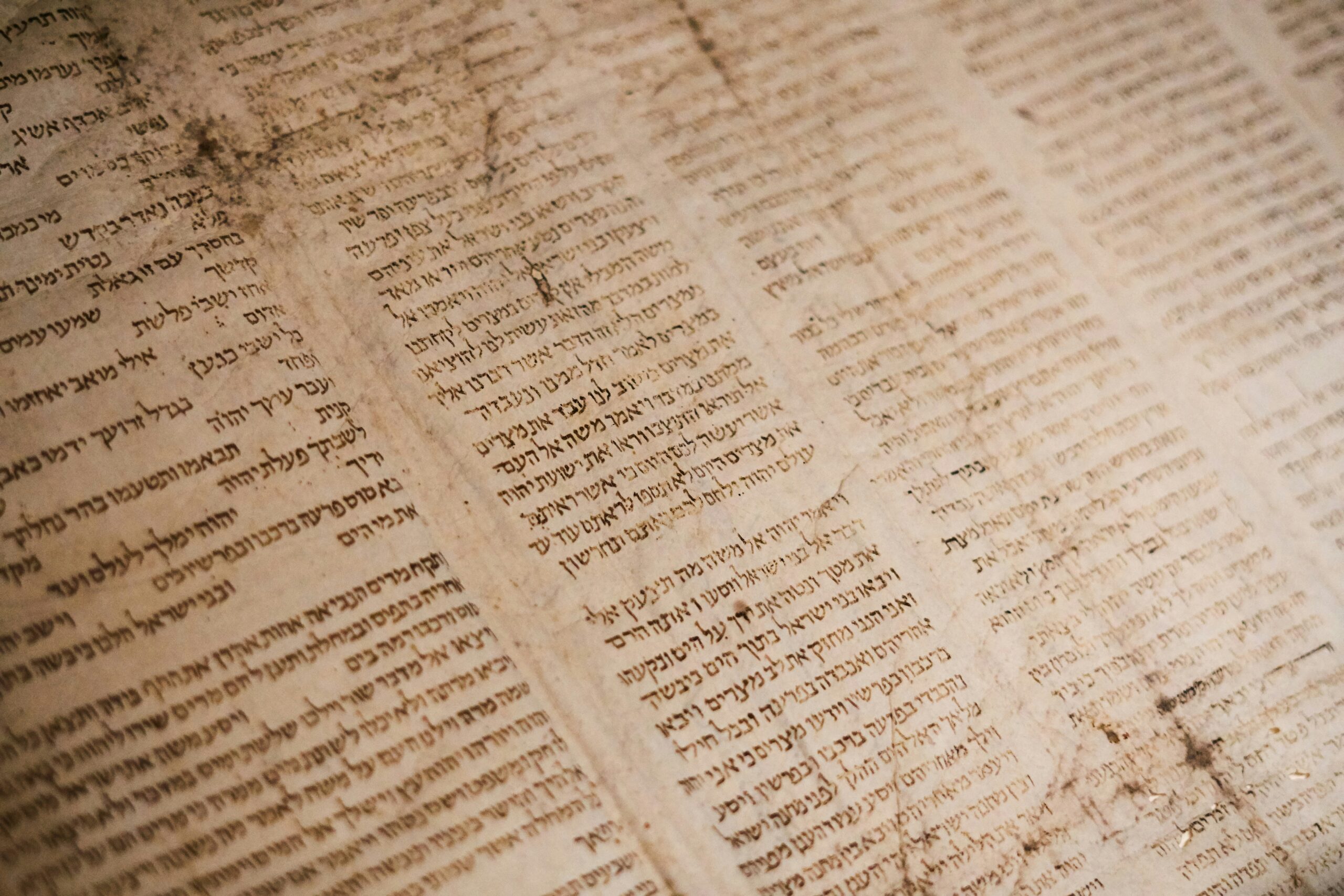
    Ancient Hebrew text written on weathered parchment
    Photo by Tanner Mardis on Unsplash

    Why this is comfort, not terror

    Step back and ask: why would Christians confess this at all? Because the alternative is worse.

    If God has not decreed all things, then the universe is ultimately running on chance, and your salvation is ultimately running on you. That is not good news. That is terrifying. A God who is surprised by events cannot promise that “for those who love God all things work together for good” (Romans 8:28, ESV). Only a God whose counsel stands can make that promise and keep it.

    The decree means your worst day was not a glitch in the plan. It means the cross was not Plan B. It means that the God who purposed your salvation before the foundation of the world is not going to lose you now through inattention. “Those whom he predestined he also called, and those whom he called he also justified, and those whom he justified he also glorified” (Romans 8:30, ESV). Notice the chain has no broken links.

    This is why the old Reformed writers called the decree a pillow for the weary head. It is not a puzzle to solve. It is a place to rest.

    A calm ocean horizon under a soft pastel sky at dusk
    Photo by Sally Song on Unsplash

    So, dear Theo

    If the word “decree” makes you nervous, you are not alone, and you are not wrong to take it seriously. But do not let the nervousness keep you from the comfort. Read chapter 3 slowly. Notice the careful boundaries. Notice that every hard edge in the doctrine is there to protect God’s holiness and your genuine humanity at the same time.

    God decreed all things, freely and wisely and unchangeably, and he did it as a Father, not as a fate. Rest there.