
Tag: Faithfulness

  • My Master Is Delayed: The Quiet Drift of the Wicked Servant

    My Master Is Delayed: The Quiet Drift of the Wicked Servant

    Jesus tells five pictures in Luke 12:35-48, and four of them are encouraging. The waiting servants are blessed. The watchful homeowner is commended. The wise manager is set over all his master’s possessions. The accountable servants learn that God judges justly, each according to what he was given. But the fourth picture is the one we would rather skip. It is the wicked servant. He is not a stranger to the household. He is one of the master’s own servants, given the same trust as the wise manager, and he drifts.

    “But if that servant says to himself, ‘My master is delayed in coming,’ and begins to beat the male and female servants, and to eat and drink and get drunk, the master of that servant will come on a day when he does not expect him and at an hour he does not know, and will cut him in pieces and put him with the unfaithful.” (Luke 12:45-46)

    An old wooden analog clock showing ten o'clock
    Photo by LVL9 Studio on Unsplash

    It begins with a sentence to himself

    Notice where the drift starts. Not with a grand rebellion, but with a sentence spoken to himself: “My master is delayed.” That is true, in a sense. Two thousand years have passed since Jesus spoke these words, and he has not yet returned. The delay is real, and Jesus knows it is the hardest part of waiting. The question is what the delay does to us. For the waiting servants, the delay is a reason to keep the lamps burning. For the wicked servant, the delay becomes permission. If the master is not coming soon, then the household is mine to manage as I please.

    I find this convicting because the drift never announces itself as drift. Nobody wakes up and decides to become the wicked servant. It starts the way most bad habits start: a small delay, a task put off, a standard quietly lowered because no one is watching. A deadline that feels far away has a way of making today feel unimportant. Jesus is telling us that today is exactly where faithfulness lives.

    The drift shows in two directions

    Once the servant has decided the master is delayed, two things happen, and they happen together. He begins to beat the male and female servants, and he begins to eat and drink and get drunk. Harshness toward others, indulgence toward himself. That is the shape of stewardship turned inward. The same resources, the same position, the same household, but now everything serves the servant instead of the master.

    The sermon that gave us this passage put it plainly. The wise manager looks at all the master’s goods and apportions them to others for their good, at the proper time. The wicked servant looks at the same goods and uses them for himself. The contrast is not between a gifted servant and an ungifted one. It is between a servant who serves the household and a servant who serves himself.

    Scripture has seen this before. In Ezekiel 34, God condemns the shepherds of Israel who fed themselves instead of the flock: “Ah, shepherds of Israel who have been feeding yourselves! Should not shepherds feed the sheep?” (Ezekiel 34:2). And Jesus names the alternative in Mark 10. The rulers of the Gentiles lord it over their people, “but it shall not be so among you. But whoever would be great among you must be your servant” (Mark 10:42-43). Paul gives the same pattern in Philippians 2: “Do nothing from selfish ambition or conceit, but in humility count others more significant than yourselves. Let each of you look not only to his own interests, but also to the interests of others” (Philippians 2:3-4).

    The test of stewardship, then, is simple to state and hard to live: are the things entrusted to me flowing outward to others, or pooling around me?

    A lantern burning in the darkness
    Photo by David Gabrić on Unsplash

    The master does come

    This is severe language, and I do not want to soften it into something it is not. Jesus means it as a warning, and warnings in Scripture are a means of grace. They are given so that we will wake up, not so that we will despair.

    The Confession helps us hold the warning and the promise together. It teaches that believers may fall into grievous sins and continue in them for a time, yet God renews them again to repentance (1689, chapter 17, paragraph 3). The warning passages are one of the ways he does that renewing. At the same time, the Confession insists that good works are the fruits and evidences of a true and lively faith (1689, chapter 16, paragraph 2). A life with no fruit in either direction is a life worth examining honestly.

    This is where charity matters, including charity toward ourselves. There is a difference between a servant who struggles and a servant who has settled. The struggling servant knows he is drifting and wants to come back. The settled servant has made peace with the drift and calls it wisdom. Jesus is speaking to the settled servant here, and to the part of each of us that is tempted to settle. James puts the same truth in one sentence: “So whoever knows the right thing to do and fails to do it, for him it is sin” (James 4:17). Knowledge raises accountability.

    That is why the sermon pressed the point about our Bibles. Almost all of us can read. We have the Word of God in our own language, on our shelves and on our phones, for free. Christians in other centuries died so that we could have it. The question Jesus asks is what we are doing with it.

    The honest question

    So where have I started saying, “My master is delayed”? For me, the honest answer is usually found in the small places. The Bible left on the shelf day after day. The household, my family and my church, treated as an audience for my gifts rather than a people I am called to serve. Time and money spent first on my own comfort, with whatever is left over going to the Lord’s work. None of that looks like beating the servants or getting drunk. But it is the same drift in a quieter key, and Jesus is kind enough to name it before it grows.

    The antidote is not anxiety. It is a return to the wise manager’s posture. The master’s goods are for the household, at the proper time. Paul’s counsel fits here: “Look carefully then how you walk, not as unwise but as wise, making the best use of the time, because the days are evil” (Ephesians 5:15-16). And the pattern is Christ himself: “For even the Son of Man came not to be served but to serve, and to give his life as a ransom for many” (Mark 10:45). He is the master who serves, and his servants learn to serve the same way.
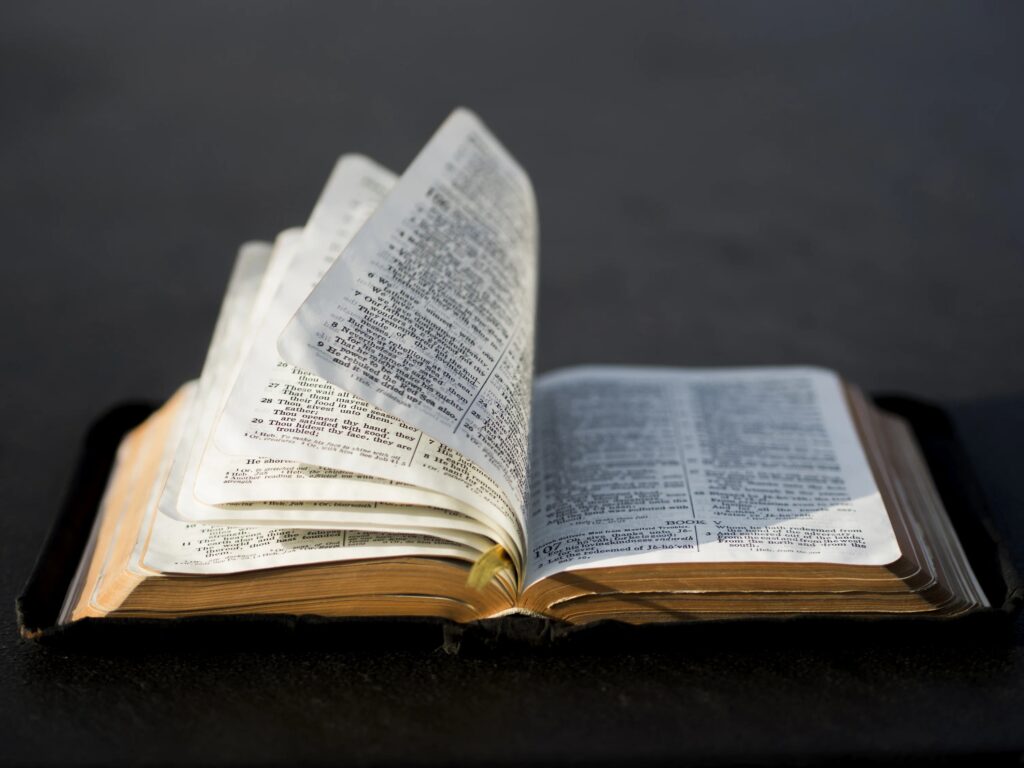
    An open Bible on a desk
    Photo by Aaron Burden on Unsplash

    Waking up to a generous master

    The good news is that the master who returns in this parable is the same master we met at the start of it, the one who dresses himself for service and has his servants recline at table, and comes and serves them (Luke 12:37). The warning and the promise belong together. The warning wakes us. The promise tells us what we are waking up to: a master whose generosity is extravagant and whose reward is real.

    The delay is not permission to drift. It is time, given in mercy, to be found faithful. That is the challenge the sermon left us with, and it is the challenge I leave with you: not to be impressive, not to be busy, but to be faithful with what you have been given, where you have been given it, until the master comes.

    Sincerely, your friend.

  • Faithful in Your Own Lane

    Faithful in Your Own Lane

    Dear Theo,

    I know Peter’s question in Luke 12 because I have asked it myself.

    Jesus has just told His disciples to stay dressed for action and keep their lamps burning, like servants waiting for their master to come home. Then Peter interrupts: “Lord, are you telling this parable for us or for all?” (Luke 12:41 ESV).

    On the surface, Peter wants to know who the parable is for. Underneath, I suspect he wants to know where he stands. Am I in the inner circle or in the crowd? It is the question we ask when we hear a hard word from Jesus and wonder how it applies to someone else.

    Jesus does not answer Peter the way Peter asked. He answers him the way Peter needed.

    A Question We All Ask

    Peter’s question is understandable. Some hearers were His twelve disciples. Others were a large crowd. Peter wanted the lines drawn clearly. If this parable is for us, it carries weight. If it is for all, it is general advice, and general advice is easier to admire than to obey.

    We do the same thing, in both directions. Sometimes we hear a call to faithfulness and quietly assign it to someone with a bigger platform or a more visible gift. That is not our lane, we tell ourselves. Sometimes we resent that someone else seems to have been given more. Why does their household look larger than mine? Either way, we are no longer listening to the Master. We are auditing the other servants.

    The sermon on this passage in my notes makes the point plainly: Jesus refuses to let us audit other people’s stewardship. He calls each of us to faithfulness with what we have been given.

    Jesus Answers With a Manager, Not a Ranking

    Jesus answers Peter with another picture. “Who then is the faithful and wise manager, whom his master will set over his household, to give them their portion of food at the proper time? Blessed is that servant whom his master will find so doing when he comes” (Luke 12:42-43 ESV).

    Notice what Jesus does not do. He does not rank the disciples or list who has the largest household. He describes a manager: someone entrusted with a household that is not his own, whose job is to give the household its portion of food at the proper time. He does not own the pantry. He serves the household on the master’s behalf, at the master’s timing.

    That is what stewardship means. In practice it is small and repeated: meals cooked, bills paid honestly, children taught patiently, church work done without applause, a neighbor helped unseen. Peter puts it plainly: “As each has received a gift, use it to serve one another, as good stewards of God’s varied grace” (1 Peter 4:10 ESV).

    The manager is blessed not because his household is large, but because his master finds him doing what he was given to do. Faithfulness is not measured by the size of the assignment. It is measured by whether we are at our post when the Master comes.

    The contrast makes the same point from the other side. The wicked servant decides his master is delayed, then uses the household for himself. He beats the other servants and eats and drinks. The difference is not talent. It is whom the stewardship serves. One serves the household. The other serves himself.

    Jesus closes with a sobering sentence: “Everyone to whom much was given, of him much will be required, and from him to whom they entrusted much, they will demand the more” (Luke 12:48 ESV). Accountability follows entrustment. James says it plainly: “So whoever knows the right thing to do and fails to do it, for him it is sin” (James 4:17 ESV).

    A household table set for a shared meal
    Photo by Stefan Vladimirov on Unsplash

    The Same Question, Years Later

    Peter did not learn this lesson in one hearing. None of us do. Years later, after the resurrection, Jesus tells Peter something hard about Peter’s own future. Peter turns, sees John, and asks the old question in a new form: “Lord, what about this man?” (John 21:21 ESV).

    It is Luke 12:41 all over again. If this is my lot, what is his? Jesus answers: “If it is my will that he remain until I come, what is that to you? You follow me” (John 21:22 ESV).

    That sentence is both bracing and kind. It is bracing because it refuses our curiosity about other people. It is kind because it frees Peter from a job he was never given. Peter does not have to manage John’s calling. He only has to follow Jesus.

    The sermon notes I am drawing on put it well. We do not worry about the faithfulness or the extent of other people’s lives. We follow Him. The temptation is to reverse that order: to study other people’s faithfulness closely and follow Jesus loosely. Comparison makes us proud or bitter, sometimes both in one afternoon. Both are ways of leaving our own post to inspect someone else’s.

    Paul gives the corrective: “Who are you to pass judgment on the servant of another? It is before his own master that he stands or falls. And he will be upheld, for the Lord is able to make him stand” (Romans 14:4 ESV). Another person’s household is not your household to manage. Your household is.

    Your Lane Is Not Smaller, It Is Yours

    Let me be concrete. Your lane is the people and responsibilities actually entrusted to you: your family, your work, your church, your neighbors, your money, your time, your words. It is the portion you are supposed to serve, at the proper time, to the people in your house.

    That lane may look unimpressive, without a title or thanks. But it is not smaller in God’s eyes simply because it is quieter. A manager over a small household who feeds it faithfully is doing exactly what the master asked.

    Faithfulness must therefore be defined by service, not visibility. Jesus said the rulers of the Gentiles lord authority over others, “but it shall not be so among you. But whoever would be great among you must be your servant” (Mark 10:42-43 ESV). He gave the reason in His own life: “For even the Son of Man came not to be served but to serve, and to give his life as a ransom for many” (Mark 10:45 ESV).

    So ask the practical question, not the comparative one. Not, “Am I doing as much as they are?” but, “Am I serving the people I have actually been given?” The first question keeps you restless. The second keeps you busy in the best sense.

    Faithfulness in your own lane does not mean refusing counsel. We need other Christians to see our blind spots. But counsel says, “Help me be faithful where I am.” Auditing says, “Tell me why they get to do that and I do not.”

    A notebook and pen
    Photo by Justin Morgan on Unsplash

    Much Given, Much Required, Without Panic

    Does this mean we should live in fear of the accounting? The 1689 London Baptist Confession states it plainly: God has appointed a day of judgment, in which He will manifest His justice and His mercy to all (1689 London Baptist Confession 32.1). The manager will give an account of the household.

    But notice the order of the gospel. The manager is not hired to earn the house. He is entrusted with it because the master trusts him. Faithfulness is not how we purchase favor. It is how we live inside it.

    So do not panic, and do not drift. Panic says the accounting depends entirely on your performance. Drift says it does not matter. Faithfulness says: I have been given much, therefore I will do the next faithful thing, in my own lane, and trust the Master with the rest.

    That is freeing. You do not have to be John or Peter. Be faithful where you are, with what you have, for the people you have been given.

    Peter asked, “Lord, are you telling this parable for us or for all?” Jesus answered with a manager, and later with a command: “You follow me.” Our question is simpler than we make it, and harder than we admit. Not, “What about them?” But, “Am I following Him, in my own lane, today?”

    Stay at your post. Serve your household. Let the Master worry about everyone else’s.

    Sincerely, your friend