
Jesus tells five pictures in Luke 12:35-48, and four of them are encouraging. The waiting servants are blessed. The watchful homeowner is commended. The wise manager is set over all his master’s possessions. The accountable servants learn that God judges justly, each according to what he was given. But the fourth picture is the one we would rather skip. It is the wicked servant. He is not a stranger to the household. He is one of the master’s own servants, given the same trust as the wise manager, and he drifts.
“But if that servant says to himself, ‘My master is delayed in coming,’ and begins to beat the male and female servants, and to eat and drink and get drunk, the master of that servant will come on a day when he does not expect him and at an hour he does not know, and will cut him in pieces and put him with the unfaithful.” (Luke 12:45-46)

It begins with a sentence to himself
Notice where the drift starts. Not with a grand rebellion, but with a sentence spoken to himself: “My master is delayed.” That is true, in a sense. Two thousand years have passed since Jesus spoke these words, and he has not yet returned. The delay is real, and Jesus knows it is the hardest part of waiting. The question is what the delay does to us. For the waiting servants, the delay is a reason to keep the lamps burning. For the wicked servant, the delay becomes permission. If the master is not coming soon, then the household is mine to manage as I please.
I find this convicting because the drift never announces itself as drift. Nobody wakes up and decides to become the wicked servant. It starts the way most bad habits start: a small delay, a task put off, a standard quietly lowered because no one is watching. A deadline that feels far away has a way of making today feel unimportant. Jesus is telling us that today is exactly where faithfulness lives.
The drift shows in two directions
Once the servant has decided the master is delayed, two things happen, and they happen together. He begins to beat the male and female servants, and he begins to eat and drink and get drunk. Harshness toward others, indulgence toward himself. That is the shape of stewardship turned inward. The same resources, the same position, the same household, but now everything serves the servant instead of the master.
The sermon that gave us this passage put it plainly. The wise manager looks at all the master’s goods and apportions them to others for their good, at the proper time. The wicked servant looks at the same goods and uses them for himself. The contrast is not between a gifted servant and an ungifted one. It is between a servant who serves the household and a servant who serves himself.
Scripture has seen this before. In Ezekiel 34, God condemns the shepherds of Israel who fed themselves instead of the flock: “Ah, shepherds of Israel who have been feeding yourselves! Should not shepherds feed the sheep?” (Ezekiel 34:2). And Jesus names the alternative in Mark 10. The rulers of the Gentiles lord it over their people, “but it shall not be so among you. But whoever would be great among you must be your servant” (Mark 10:42-43). Paul gives the same pattern in Philippians 2: “Do nothing from selfish ambition or conceit, but in humility count others more significant than yourselves. Let each of you look not only to his own interests, but also to the interests of others” (Philippians 2:3-4).
The test of stewardship, then, is simple to state and hard to live: are the things entrusted to me flowing outward to others, or pooling around me?

The master does come
This is severe language, and I do not want to soften it into something it is not. Jesus means it as a warning, and warnings in Scripture are a means of grace. They are given so that we will wake up, not so that we will despair.
The Confession helps us hold the warning and the promise together. It teaches that believers may fall into grievous sins and continue in them for a time, yet God renews them again to repentance (1689, chapter 17, paragraph 3). The warning passages are one of the ways he does that renewing. At the same time, the Confession insists that good works are the fruits and evidences of a true and lively faith (1689, chapter 16, paragraph 2). A life with no fruit in either direction is a life worth examining honestly.
This is where charity matters, including charity toward ourselves. There is a difference between a servant who struggles and a servant who has settled. The struggling servant knows he is drifting and wants to come back. The settled servant has made peace with the drift and calls it wisdom. Jesus is speaking to the settled servant here, and to the part of each of us that is tempted to settle. James puts the same truth in one sentence: “So whoever knows the right thing to do and fails to do it, for him it is sin” (James 4:17). Knowledge raises accountability.
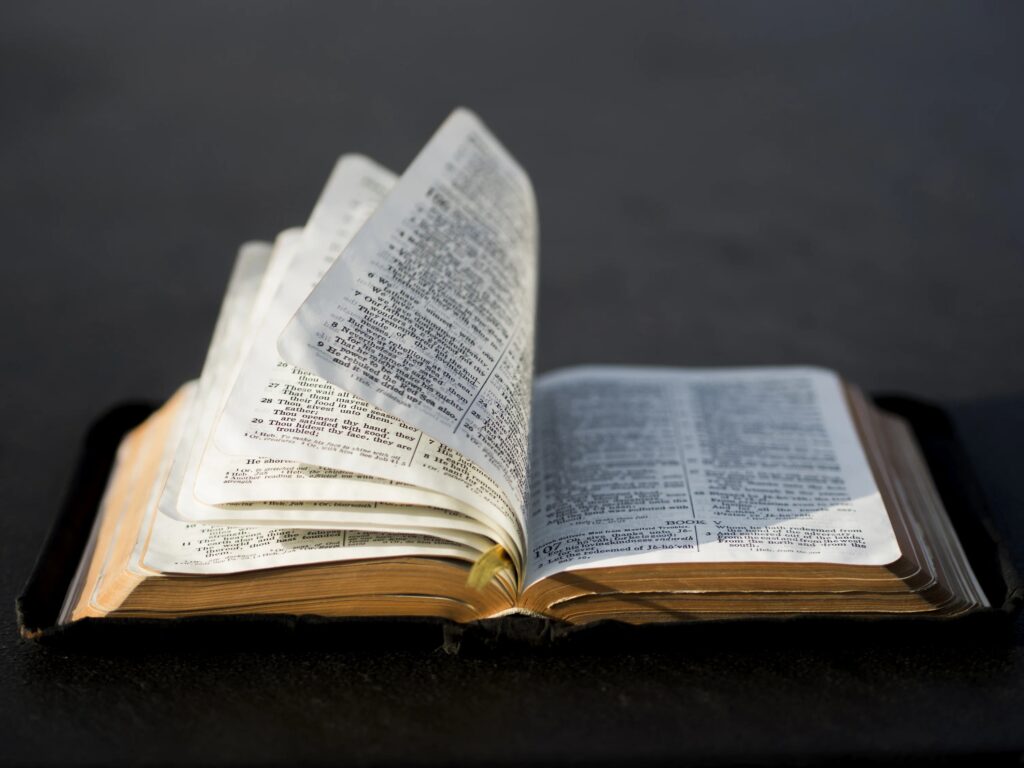
That is why the sermon pressed the point about our Bibles. Almost all of us can read. We have the Word of God in our own language, on our shelves and on our phones, for free. Christians in other centuries died so that we could have it. The question Jesus asks is what we are doing with it.
The honest question
So where have I started saying, “My master is delayed”? For me, the honest answer is usually found in the small places. The Bible left on the shelf day after day. The household, my family and my church, treated as an audience for my gifts rather than a people I am called to serve. Time and money spent first on my own comfort, with whatever is left over going to the Lord’s work. None of that looks like beating the servants or getting drunk. But it is the same drift in a quieter key, and Jesus is kind enough to name it before it grows.
The antidote is not anxiety. It is a return to the wise manager’s posture. The master’s goods are for the household, at the proper time. Paul’s counsel fits here: “Look carefully then how you walk, not as unwise but as wise, making the best use of the time, because the days are evil” (Ephesians 5:15-16). And the pattern is Christ himself: “For even the Son of Man came not to be served but to serve, and to give his life as a ransom for many” (Mark 10:45). He is the master who serves, and his servants learn to serve the same way.
Waking up to a generous master
The good news is that the master who returns in this parable is the same master we met at the start of it, the one who dresses himself for service and has his servants recline at table, and comes and serves them (Luke 12:37). The warning and the promise belong together. The warning wakes us. The promise tells us what we are waking up to: a master whose generosity is extravagant and whose reward is real.
The delay is not permission to drift. It is time, given in mercy, to be found faithful. That is the challenge the sermon left us with, and it is the challenge I leave with you: not to be impressive, not to be busy, but to be faithful with what you have been given, where you have been given it, until the master comes.
Sincerely, your friend.
Leave a Reply