Author: Jordan Gulledge

  • Of God’s Decree, Without the Panic

    Of God’s Decree, Without the Panic

    Of all the words in the Christian vocabulary, “decree” might be the one most likely to raise your blood pressure. It sounds cold. It sounds like fate. It sounds like God decided everything in advance and we are just actors reading lines.

    If that is what you hear when you hear “the decree of God,” then the 1689 London Baptist Confession has good news for you: that is not what it means either. Chapter 3, “Of God’s Decree,” is one of the most pastoral chapters in the whole confession. It was written to steady Christians, not to frighten them.

    What the Confession actually says

    Here is the opening paragraph, and it deserves a slow read:

    “God hath decreed in himself, from all eternity, by the most wise and holy counsel of his own will, freely and unchangeably, all things, whatsoever comes to pass; yet so as thereby is God neither the author of sin nor hath fellowship with any therein; nor is violence offered to the will of the creature, nor yet is the liberty or contingency of second causes taken away, but in all things established; in which appears his wisdom in disposing all things, and power and faithfulness in accomplishing his decree.” (1689 LBC 3.1)

    There is a lot packed in there, but the shape of it is simple. From all eternity, before anything existed, God purposed whatsoever comes to pass. He did this freely (nobody forced him), wisely (it is the product of infinite wisdom, not whim), and unchangeably (he does not revise the plan).

    Scripture says the same thing plainly: God “works all things according to the counsel of his will” (Ephesians 1:11, ESV), and “I am God, and there is no other; I am God, and there is none like me, declaring the end from the beginning and from ancient times things not yet done, saying, ‘My counsel shall stand, and I will accomplish all my purpose’” (Isaiah 46:9-10, ESV).

    What the decree does not mean

    But notice how carefully the confession draws the boundaries. Three denials, each aimed at a specific fear.

    First, God is “neither the author of sin nor hath fellowship with any therein.” The decree does not make God the one responsible for evil. Scripture holds two truths together that our minds want to pull apart: God ordains whatsoever comes to pass, and sinners sin willingly and are accountable. Peter preached both in the same sermon, saying Jesus was “delivered up according to the definite plan and foreknowledge of God” and in the same breath, “you crucified and killed by the hands of lawless men” (Acts 2:23, ESV). God’s decree and human responsibility are friends, not enemies.

    Second, “nor is violence offered to the will of the creature.” The decree does not turn you into a puppet. You make real choices, you have a real will, and your choices have real consequences. God’s eternal purpose works through your willing actions, not around them.

    Third, “nor yet is the liberty or contingency of second causes taken away.” This is the confession’s way of saying that the world still runs the way the world runs. Rain still falls because of weather patterns. You still got the job because you applied and interviewed well. God’s decree is the deep foundation under all of it, not a replacement for any of it.

    If your picture of the decree leaves no room for genuine human choice, you have gone further than the confession goes. Pull back to paragraph 1.

    Election, plainly

    The chapter goes on to speak of predestination and election, and here is where the panic usually spikes. So let us be plain.

    The confession teaches that from eternity, God chose some to everlasting life, “out of his mere free grace and love, without any other thing in the creature as a condition or cause moving him thereunto” (1689 LBC 3.5). Election is not God looking down the corridor of time, seeing who would choose him, and then ratifying their decision. It is God choosing, freely, out of love.

    And the rest he was “pleased, according to the unsearchable counsel of his own will, whereby he extendeth or withholdeth favour as he pleaseth,” to pass by (1689 LBC 3.7). The confession does not pretend this is easy. It calls God’s counsel “unsearchable.” But it insists that God is never unjust in what he withholds, because no one deserves his favour in the first place.

    Now here is the question that actually keeps people up at night: “Am I elect?” The confession’s answer is wonderfully practical. Do not try to peer into God’s secret decree. Look instead at its effects in your life. Are you trusting Christ? Are you turning from sin? Do you love the saints? Then you have your answer, not by speculation but by evidence. As Peter puts it, “be all the more diligent to confirm your calling and election” (2 Peter 1:10, ESV). Election is confirmed the way a tree is confirmed: by its fruit.

    Ancient Hebrew text written on weathered parchment
    Photo by Tanner Mardis on Unsplash

    Why this is comfort, not terror

    Step back and ask: why would Christians confess this at all? Because the alternative is worse.

    If God has not decreed all things, then the universe is ultimately running on chance, and your salvation is ultimately running on you. That is not good news. That is terrifying. A God who is surprised by events cannot promise that “for those who love God all things work together for good” (Romans 8:28, ESV). Only a God whose counsel stands can make that promise and keep it.

    The decree means your worst day was not a glitch in the plan. It means the cross was not Plan B. It means that the God who purposed your salvation before the foundation of the world is not going to lose you now through inattention. “Those whom he predestined he also called, and those whom he called he also justified, and those whom he justified he also glorified” (Romans 8:30, ESV). Notice the chain has no broken links.

    This is why the old Reformed writers called the decree a pillow for the weary head. It is not a puzzle to solve. It is a place to rest.

    A calm ocean horizon under a soft pastel sky at dusk
    Photo by Sally Song on Unsplash

    So, dear Theo

    If the word “decree” makes you nervous, you are not alone, and you are not wrong to take it seriously. But do not let the nervousness keep you from the comfort. Read chapter 3 slowly. Notice the careful boundaries. Notice that every hard edge in the doctrine is there to protect God’s holiness and your genuine humanity at the same time.

    God decreed all things, freely and wisely and unchangeably, and he did it as a Father, not as a fate. Rest there.


  • Stay Dressed for Action: What It Means to Be Ready for Christ’s Return

    Stay Dressed for Action: What It Means to Be Ready for Christ’s Return

    Every generation of Christians has wondered the same thing: how do you actually get ready for Jesus to come back? Some people try to decode timelines. Some live in a low-grade panic, as if readiness were a feeling you have to sustain. And some quietly give up on the whole idea, filing the Second Coming under doctrines that are technically true but practically useless.

    Jesus had something much more concrete in mind.

    The sun rising over a field of grass
    Photo by Jessica Cogar on Unsplash

    What Jesus actually said

    In Luke 12, Jesus turns to his disciples and gives them a picture, not a puzzle:

    “Stay dressed for action and keep your lamps burning, and be like men who are waiting for their master to come home from the wedding feast, so that they may open the door to him at once when he comes and knocks.” (Luke 12:35-36, ESV)

    In the ancient world, long robes were normal dress, but nobody worked or traveled in them. To “dress for action” meant to tuck your robe into your belt so you could move. Servants did this when there was work to do. Lamps burning meant someone was awake, on duty, expecting the master’s return at any hour.

    Notice what Jesus does not say. He does not say, “Figure out the date.” He does not say, “Work yourself into a state of spiritual adrenaline.” He says: be dressed, be awake, be at your post. Readiness, for Jesus, is a posture of faithful expectation, not a mood.

    Ready does not mean anxious

    Here is where many Christians get tangled. We hear “be ready” and we hear “be afraid of being caught off guard.” But fear of being caught is not the same as readiness. A servant who is terrified of his master is not ready; he is just scared. And scared servants hide things, cut corners, and perform when the master is watching.

    Jesus goes out of his way to remove fear from the picture. Just a few verses earlier, he told these same disciples, “Fear not, little flock, for it is your Father’s good pleasure to give you the kingdom” (Luke 12:32, ESV). The command to stay dressed for action is given to people who have already been told not to fear. Readiness grows in the soil of assurance, not anxiety.

    Paul says the same thing another way: “So then let us not sleep, as others do, but let us keep awake and be sober” (1 Thessalonians 5:6, ESV). Awake and sober. Not awake and frantic.

    Ready means faithful in the ordinary

    So what does the dressed-for-action life actually look like on a Tuesday? Luke 12 gives the answer in the verses that follow. Jesus keeps talking about servants doing their assigned work: managing the household, feeding people on time, handling what the master entrusted to them (Luke 12:42-44, ESV).

    Readiness is faithfulness in your lane. It is the parent teaching their children the catechism at the kitchen table. It is the employee doing honest work when nobody is watching. It is the church member showing up, giving, praying, and loving people who are hard to love. None of this is dramatic. All of it is exactly what Jesus described.

    This is why the New Testament keeps connecting Christ’s return to ordinary obedience rather than extraordinary experiences. Peter writes that since the day of the Lord is coming, we ought to live “lives of holiness and godliness” (2 Peter 3:11, ESV). Not lives of speculation. Lives of holiness.

    The lamps stay burning through the ordinary means of grace: the Word read and preached, prayer, the Lord’s Supper, fellowship with the saints. These are not glamorous, but they are how oil gets in the lamp.

    A lighted kerosene lantern glowing in the dark
    Photo by Vladimir Fedotov on Unsplash

    The surprising promise

    Then Jesus says something astonishing, the kind of sentence you could read ten times and still not absorb:

    “Blessed are those servants whom the master finds awake when he comes. Truly, I say to you, he will dress himself for service and have them recline at table, and he will come and serve them.” (Luke 12:37, ESV)

    Read that again. The master comes home, and instead of inspecting the servants, he puts on the servant’s belt himself and serves them dinner. The returning King does not return to be served. He returns to serve.

    This is the gospel logic underneath the whole passage. We do not stay awake to earn the master’s favor. We stay awake because the master has already shown us what kind of master he is: the kind who girds himself and serves. Our readiness is a response to his grace, not a payment for it.

    And notice the tenderness of it. The reward for watchfulness is not a performance review. It is a meal, served by the master himself, to servants who simply stayed at their post.

    So, dear Theo

    You do not need a timeline chart to be ready for Christ’s return. You do not need to sustain a feeling of urgency. You need, as Jesus put it, to be dressed for action with your lamp burning: trusting the Father who delights to give you the kingdom, faithful in the ordinary work he has assigned you, and awake to the promise that when the master knocks, he is coming to serve you, not to catch you.

    “You also must be ready, for the Son of Man is coming at an hour you do not expect” (Luke 12:40, ESV). Ready does not mean afraid. Ready means faithful, right where you are, until he comes.

  • Who Is “Theo”? Why This Blog Is Written as a Letter

    Who Is “Theo”? Why This Blog Is Written as a Letter

    Every so often someone asks me who Theo is.

    There is a simple answer and a longer one. The simple answer: Theo is short for Theophilus, the friend to whom Luke addressed his Gospel and the book of Acts. The longer answer is this article, and it is also the reason this site exists at all.

    “Inasmuch as many have undertaken to compile a narrative of the things that have been accomplished among us,” Luke begins, “it seemed good to me also, having followed all things closely for some time past, to write an orderly account for you, most excellent Theophilus, that you may have certainty concerning the things you have been taught.” (Luke 1:1, 3-4 ESV)

    That is the mission statement of Dear Theo. A letter, written plainly, so that an ordinary Christian may have certainty about what he has been taught.

    Who was Theophilus?

    His name is Greek and it means “lover of God.” Beyond that, honest scholars disagree, and I think it is worth saying so up front, because this site will never pretend that every question has one settled answer.

    Some hold that Theophilus was a real man, perhaps a Roman official or a wealthy patron. Luke calls him “most excellent,” a title used elsewhere in Acts for governors, and the early church fathers treated him as a historical person. Others argue that the name is a kind of gracious pseudonym, addressed to every “lover of God” who would ever read these words. Luke 1:3 also admits that others had already tried to compile accounts, so the letter was filling a need that real readers felt.

    From my perspective, the two views are not as opposed as they first appear. If Theophilus was a real person, Luke still wrote in a way that serves every lover of God. If the name was symbolic, the point remains: Luke wrote to a friend, not to a committee. Either way, the posture is the same. A letter to a friend.

    Why a letter and not a lecture?

    I chose the letter form for a reason, and it is a biblical reason. A large portion of the New Testament is correspondence. Paul wrote letters to churches he loved and churches he worried about. John wrote letters to congregations facing false teaching. These were not academic papers. They were written to be read aloud to ordinary Christians, many of whom could not read at all.

    A lecture performs. A letter corresponds. A lecture says, “Watch me think.” A letter says, “I was thinking of you.” There is a difference, and it matters for theology.

    C.S. Lewis understood this. He wrote “Letters to Malcolm,” an imagined correspondence about prayer, because some subjects only open up when they are addressed to a person. Lewis once observed that we must not suppose the difficulty of theology means we should give it up, since the difficulty lies in the subject, not in the explaining. A letter gives the writer permission to take the reader by the hand and walk through the difficulty together. That is what I hope to do here.

    I should add one more distinction. This site is not punditry and it is not a store. There is plenty of theology online that functions as entertainment: confident voices scoring points, each new post a volley in a war the reader did not start. And there is theology that functions as credentialing: books written to impress other scholars, where the reader is allowed to watch but not to participate. Neither of those is a letter. A letter assumes a reader who is intelligent but untrained, and it takes the time to explain.

    Handwritten letter and envelope on a wooden desk
    Photo by Olha Vilkha on Unsplash

    Why plain, and why certain?

    The site’s tagline is “Reformed theology, plainly taught.” The word plainly needs definition, because people hear it two wrong ways. Some hear “plain” and think “shallow.” Others hear “plain” and think “simplistic.” I mean neither. Plain speech is speech that a smart teenager can follow. I teach a weekly Sunday school class for teenagers at my church, and that ministry has trained me more than any classroom did. Students rise to the level of the material. What they will not forgive is jargon that hides behind itself. When I use a technical term here, I will define it the first time it appears. That is not dumbing theology down. It is refusing to let the vocabulary do the work that explanation should do.

    Plain, however, must not mean vague. Luke did not write to give Theophilus a general sense of warmth about Jesus. He wrote that he might have certainty. Certainty is a stronger word than our age is comfortable with, so let me be careful about what it claims. It does not claim that every theological question is settled. It claims that the main things are settled, and that we can know them.

    The 1689 London Baptist Confession opens with a paragraph that has shaped everything about this project:

    “Although the light of nature, and the works of creation and providence do so far manifest the goodness, wisdom, and power of God, as to leave men inexcusable; yet are they not sufficient to give that knowledge of God and His will which is necessary unto salvation.” (1689 LBC, 1.1)

    Nature preaches, in other words, but nature does not save. We need written revelation. We need an orderly account. That is why Luke wrote, and it is why the church keeps writing: so that ordinary believers may have certainty concerning the things they have been taught.

    Open book on a study desk in warm light
    Photo by Puscas Adryan on Unsplash

    What you will find here

    I am writing from a confessional Reformed Baptist perspective, in full subscription to the 1689 London Baptist Confession. That sentence deserves a word of explanation for readers who are new to confessional language. To be confessional simply means to say, in public and in writing, what I believe the Bible teaches, in words I can be held to. A confession is not a rival to Scripture. It is a summary that can be tested against Scripture, and it is meant to be tested. When I am wrong about what the confession says, or about what Scripture says, I want to know.

    The posts here will work through the confession in plain language. They will also take up the doctrines of grace, the ordinary means by which God grows his people (the preached Word, prayer, and the ordinances of baptism and the Lord’s Supper), and the work of teaching the faith to the young. Some posts will read the culture confessionally, because the world keeps asking questions the church answered centuries ago. Every post will assume you are intelligent and untrained, and every post will end where it should: with the text of Scripture open and the reader equipped.

    I will disagree with other Christians sometimes. When I do, I will try to represent the other view fairly before saying why I find it unpersuasive. Disagreement is fine and expected. Sneering is not. If I cannot describe my opponent’s position in a way he would recognize, I have not earned the right to disagree with it.

    One more thing worth saying. I will sometimes write, “I find this difficult.” There are doctrines I believe with my whole heart that still stretch my understanding, and I will not project a false certainty where the church itself has wrestled. Certainty about the main things does not require pretending the deep things are shallow.

    So, dear Theo

    There is no Theo sitting across the desk from me. There are, I hope, many Theos: lovers of God, real and unnamed, reading at kitchen tables and on lunch breaks, in Sunday school rows and hospital waiting rooms. You are the reason for the letter form. You can be reached by a letter in a way a lecture cannot reach you, because a letter is a conversation, and a conversation is where teaching becomes personal.

    Luke wrote to his friend so that he might have certainty. I am writing to mine for the same reason. The material will be serious. The voice will be plain. The door is open.

    Sincerely, your friend.

  • What Does It Mean to Make a Disciple?

    What Does It Mean to Make a Disciple?

    There is a word that gets used a great deal in church circles — so often, in fact, that I think we sometimes stop asking what it actually means. That word is discipleship. We have discipleship programs, discipleship groups, discipleship curricula. And yet, if you were to ask the average churchgoer what it means to make a disciple, you might get a long pause in return. I find myself returning to this question regularly, not because I have all the answers, but because I believe the church rises or falls on how seriously she takes it.

    Open Bible on a wooden table in warm light
    Photo by Priscilla Du Preez on Unsplash

    The clearest starting point, as always, is Scripture. In Matthew 28:19–20, Jesus gave His followers what we now call the Great Commission:

    “Go therefore and make disciples of all nations, baptizing them in the name of the Father and of the Son and of the Holy Spirit, teaching them to observe all that I have commanded you. And behold, I am with you always, to the end of the age.” (ESV)

    The heart of that command is the verb make disciples. Not make converts. Not make attenders. Make disciples. The Greek word behind “disciple” is mathētēs — a learner, an apprentice, someone who follows and imitates their teacher not just in what they know, but in how they live. That distinction matters more than we might first realize.

    From my perspective, a great deal of what passes for discipleship today is really just information transfer. We teach people what Christians believe — the doctrines, the verses, the categories — and we assume that if the right information gets in, the right life will come out. But the Great Commission does not end with baptism; it continues with “teaching them to observe all that I have commanded you.” Observe. That word implies obedience, practice, lived-out faith. Paul captures the goal even more precisely in Colossians 1:28–29:

    “Him we proclaim, warning everyone and teaching everyone with all wisdom, that we may present everyone mature in Christ. For this I toil, struggling with all his energy that he powerfully works within me.” (ESV)

    The word translated “mature” here is the Greek teleios — complete, fully formed. Paul’s aim is not to produce informed Christians, but complete ones. That is a far more demanding vision, and I think it ought to shape how a church goes about growing its people.

    Cross and candle in soft light
    Photo by Annie Spratt on Unsplash

    What the Early Church Showed Us

    So what does this look like in practice? I find it helpful to look at the earliest snapshot we have of the church in Acts 2:42–47. Those first believers devoted themselves to the apostles’ teaching, to fellowship, to the breaking of bread, and to prayer. They met together in the temple courts and from house to house. They shared meals and met one another’s needs. The result was remarkable: “the Lord added to their number day by day those who were being saved” (Acts 2:47, ESV). That picture is not a program. It is a way of life — woven together, shared, and lived out in community.

    For this reason, I believe Ephesians 4:11–12 deserves more attention than it usually gets. Paul writes that pastors and teachers are given to the church “to equip the saints for the work of ministry, for building up the body of Christ” (ESV). Notice what the text does not say. It does not say the pastor is given to do the ministry for the congregation. He is given to train the congregation to do it themselves. The pastor’s job is to produce disciples who can, in turn, make more disciples. That is the picture Paul has in mind — a whole body, fitted and held together, each part working properly, growing in love.

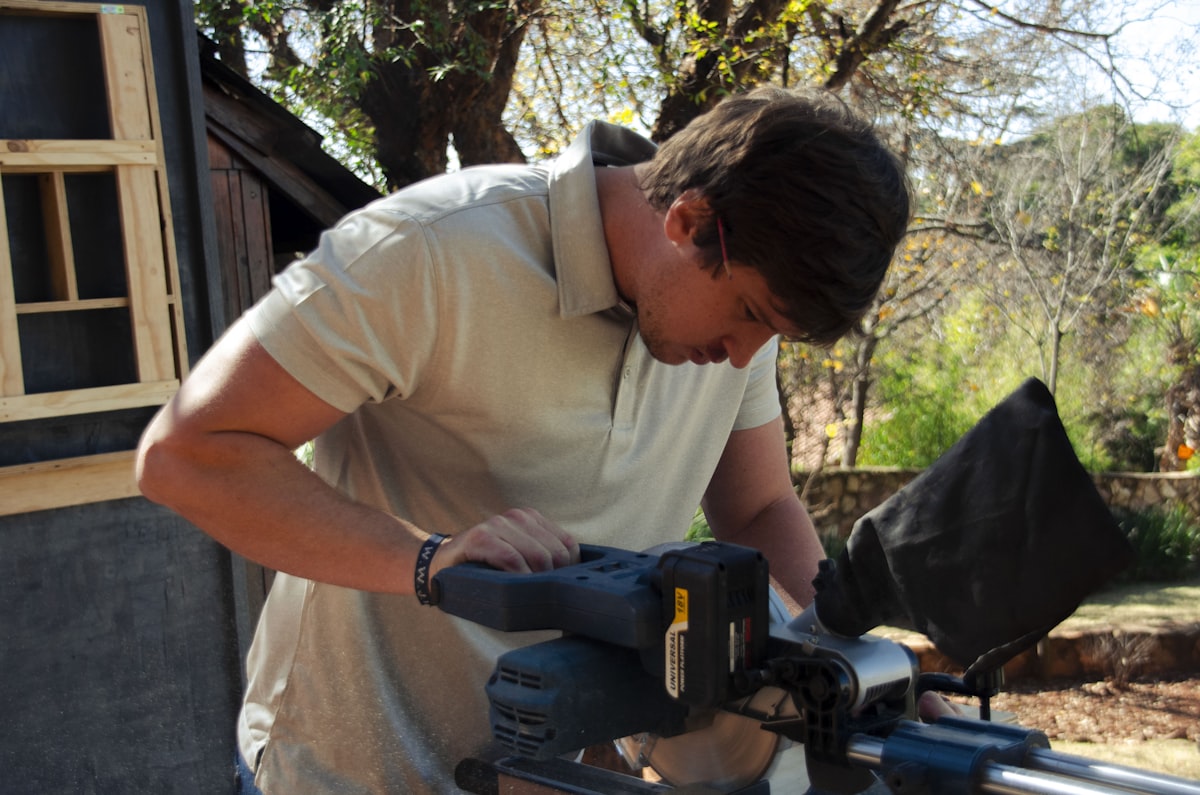
    Craftsman hands working with a saw in a workshop
    Photo by Ryno Marais on Unsplash

    The Apprentice and the Master

    Here is where an illustration helps me. Think of a young tradesman learning carpentry. He does not simply read books about woodworking. He works alongside a master craftsman, watching his hands, asking questions, making mistakes, and correcting them — week after week, year after year. Over time, the master’s skill becomes his own, not because he memorized instructions, but because he practiced. Discipleship works along similar lines. You cannot download Christlikeness. You have to live it, slowly, in relationship, under the patient tutelage of both the Word and the community of believers who are further along than you.

    I will be the first to admit that this kind of discipleship is slow. It does not scale as neatly as a weekend conference or a six-week study series. It requires time, relationship, and a willingness to stay with people through the messy middle of growth. That slowness, though, is exactly the point. The goal is teleios — completeness in Christ — and that is not a destination you reach in a semester. It is a lifelong apprenticeship with a patient Master.

    If you are in ministry, or simply trying to live faithfully in your local church, I would encourage you to hold this question alongside me: are the people around me simply learning about Christ, or are they learning to be like Him? That question, asked honestly and humbly and often, might just reshape how we invest our time, our relationships, and our energy in the months ahead.

    May we have the patience to do this work well — and the confidence that He who called us to it is with us always, to the end of the age.

  • God’s Eternity: Timeless Yet Present in Time

    God’s Eternity: Timeless Yet Present in Time

    I find myself returning often to a simple phrase, one I learned early in my theological education but which has only deepened in meaning as I’ve wrestled with it over the years: God has no beginning, end, or succession of moments in his own being. When I first encountered this definition of eternality, I confess I found it more bewildering than clarifying. How does one think about a being who exists in no particular sequence of time, who sees all moments with equal vividness, yet who genuinely acts within the stream of history? The mystery still humbles me; yet I’ve come to see that understanding God’s eternity—even partially—reshapes how we relate to him in prayer, in ministry, and in faith.

    Open Bible on wooden table
    Photo by Sixteen Miles Out on
    Unsplash

    The Timeless God Who Made Time Itself

    Let me start with what seems simplest: God has no beginning. The psalmist captures this with striking clarity: “Before the mountains were brought forth, or ever you had formed the earth and the world, from everlasting to everlasting you are God” (Psalm 90:2, ESV). This is not poetic exaggeration. It reflects a fundamental truth about God’s nature—he alone is self-existent, needing nothing outside himself to sustain his being.

    Here is where a crucial theological insight clarifies the picture. We live in a universe of time and space and matter; these three always occur together. But God created all things. Before the universe existed, there was no time, no space, no succession of moments one after another. Then God spoke, and time itself came into being. This means something remarkable: the Creator stands outside and above the very temporal framework he established. Time does not limit him or constrain him. He is not a being who grows older or weaker or changes as hours pass. To God, all of his existence is always somehow “present,” though I freely admit this strains my finite comprehension.

    Candles in church
    Photo by Toa Heftiba on
    Unsplash

    For this reason, the writer to the Hebrews describes Jesus—the eternal Word—as “the same yesterday and today and forever” (Hebrews 13:8, ESV). There is no yesterday, today, or tomorrow in God’s being. He does not “become” different. His character, his counsel, his love—these do not develop or fluctuate. They simply are, eternally whole and unchanging.

    God Sees All Time, Yet Acts in Time

    Yet here we must pause, because the doctrine of God’s eternity can easily be misunderstood in a way that makes God seem distant or indifferent to the actual flow of history. So let me add something equally important: God sees events in time and acts in time. This is not a contradiction; it is the complement to his timelessness.

    Hands in prayer on open book
    Photo by Patrick Fore on
    Unsplash

    The psalmist again helps us see this paradox: “For a thousand years in your sight are but as yesterday when it is past, or as a watch in the night. You sweep them away as with a flood; they are like a dream, like grass that is renewed in the morning” (Psalm 90:4-5, ESV). God remembers the detailed events of a thousand years with the same clarity that we recall yesterday. At the same time, any single day to God is as vividly present as if it lasted a thousand years. Nothing ever fades from his consciousness. All of history—past, present, and future—is equally vivid to him.

    Yet even so, God knows the difference between 2000 BC and today. He observed and knew exactly what was happening as events unfolded. Paul writes, “When the fullness of time had come, God sent forth his Son, born of woman, born under the law, to redeem those who were under the law” (Galatians 4:4-5, ESV). God acted at precisely the right historical moment. The whole narrative arc of Scripture—from Genesis through Revelation—is God’s own record of how he has acted over time to accomplish redemption. He does not view all moments as simultaneous in a way that erases the genuine progress of history. Rather, he sees it all as present while still respecting its sequence and temporal reality.

    I find this deeply comforting in ministry. It means that God is not distant from the struggles of this particular moment. He sees this Tuesday morning with the same intensity as he sees the final day of creation. He knows your name. He hears your prayer. He is present in your congregation’s joy and sorrow, not as a disinterested observer, but as the God who is acting, sustaining, redeeming—moving us toward his purposes through time itself.

    What This Means for Faith

    So what difference does God’s eternity make? I believe it frees us from two opposite errors. On one hand, we are freed from the anxiety that God might forget us or lose track of us as time passes. Your faithful prayer from ten years ago is as vivid to him now as it was then. His promises, once made, are eternally sure. On the other hand, we are freed from the temptation to think that God is so abstract and timeless that he does not care about real events, real suffering, real moments of grace in our lives. He does care. He acts. He enters time to meet us there.

    When I sit with a grieving family, or work through a difficult decision in ministry, or find myself wrestling with doubt, I return to this: the God who has no beginning or end sees my specific moment with eternal clarity. He is not surprised by what unfolds. He is not learning as time progresses. He has already seen the end from the beginning, as Isaiah proclaims (Isaiah 46:10, ESV). And yet he is genuinely present in this moment, acting, sustaining, moving me toward his purposes. That paradox—timeless yet temporal, infinite yet intimate—is the foundation of a faith that can be both intellectually grounded and deeply personal.

    This is why I can pray with confidence. God’s eternity does not distance him from me; it assures me that I am held in a love that has no beginning and will have no end.

  • Embracing the 3D Gospel: Understanding Cultural Nuances in Faith

    When we think about the transformative power of the gospel, we often picture it as a universal truth that transcends all cultures and contexts. However, Chapter 1 of “The 3D Gospel” by Jayson Georges introduces us to the idea that while the gospel is indeed universal, its expression and impact can vary greatly across different cultural landscapes.

    Take the story of Gulzel, a young university student from Central Asia who embraced Christianity with a sincere heart. Her journey of faith began with the traditional message that many of us are familiar with: “Your transgressions separate you from God; therefore you deserve punishment. Jesus died for your sin. Believe in him, and your sins will be forgiven.” This message of forgiveness and reconciliation resonated deeply with her, offering a sense of peace and new life in Christ.

    Yet, Gulzel’s cultural context presented challenges that this standard message of forgiveness alone could not fully address. One poignant incident highlights the complexity of her situation. Returning from her mother’s village one Sunday evening, Gulzel found herself in a taxi with a male driver and three male passengers. What started as an ordinary ride quickly turned uncomfortable as the men began propositioning her and invited her to their homes for tea. Their behavior escalated when they stopped for vodka shots and became physically aggressive.

    In that moment of fear and vulnerability, Gulzel’s primary concern was not just personal safety but also the potential shame and dishonor that could befall her family if her plight were exposed. Even when she saw her uncle driving in the opposite direction, her instinct was to hide, driven by the desire to avoid bringing shame upon her family.

    This narrative reveals the intricate layers of guilt, shame, and fear that coexist in many cultures. For Gulzel, forgiveness of sins addressed her guilt before God, but it did not fully encompass her need for honor and protection from fear. The gospel, therefore, must be presented in a way that speaks to all these dimensions of human experience.

    The 3D Gospel framework posits that different cultures respond to the gospel through three primary lenses: guilt-innocence, shame-honor, and fear-power. Western cultures, which are largely individualistic, often emphasize guilt and forgiveness. In contrast, many Eastern cultures are collectivistic, placing a high value on honor and shame. Meanwhile, animistic and tribal cultures often focus on power dynamics and fear of the spiritual realm.

    For missionaries and those engaged in cross-cultural ministry, this means that effective gospel communication must go beyond a one-dimensional message. It requires a deep understanding of the cultural context and a holistic approach that addresses guilt, restores honor, and dispels fear.

    The story of Gulzel is a powerful reminder that the gospel is multifaceted and must be contextualized to meet the diverse needs of people from different cultural backgrounds. As we seek to share the good news of Jesus Christ, let us be mindful of these cultural nuances and strive to present a gospel that is truly transformative in every dimension of human life.

    Conclusion

    Chapter 1 of “The 3D Gospel” challenges us to broaden our understanding of how the gospel speaks to people around the world. By recognizing the different cultural dimensions of guilt, shame, and fear, we can more effectively communicate the richness of God’s salvation and meet people where they are. In doing so, we fulfill the call to make disciples of all nations, bringing the fullness of Christ’s redemption to every corner of the globe.